You’re all talk. Yeah, that’s right, I’m talking to you, dear reader. Yeah, you say you’re a prepper. Or a survivalist. Or an outdoorsman. Or whatever. Yeah, you say you’re all set to survive after a SHTF event drops down around your ears. Your bug-out bag is packed and your AR-15 is oiled, sparking clean, and ready to go. You’ve got your stockpiled Dinty Moore and ramen noodles and MREs and rainwater barrels and your compass cost you a hundred bucks. But you know what? You’re full of shit. And you know what? I am, too.
By Drew, a contributing author of Survival Cache & SHTFBlog
Yeah, nobody likes hearing (or admitting) that fact. But here’s the deal: unless you’ve actually gone out and executed a real bug-out (hopefully before all that terrible “world-ending” type of stuff), and put your money where your damn mouth is, you’re full of shit. Long story short: you need to put yourself and your gear to the test before you can say with confidence that you’re good to go when the balloon goes up. I wasn’t happy with not being confident – so I’m bugging out.
Taking the First Steps
I’ve always considered myself an outdoorsman. My entire life, I’ve hunted, fished, camped, and hiked all across this great nation of ours. I’m very comfortable in the woods, and have spent countless days (and several nights) in the wild – and I loved it all. However, all this time spent in the outdoors was on MY terms – I knew where I was going, I knew what I would be doing there, and I knew how long I’d be there. Other people had been told where I’d be in case of emergency, and I had long beforehand printed topo maps and scouted any new areas – or I went places that I’d been going since I could remember. And while this is all well and good, I don’t exactly go out whitetail deer hunting with a bug-out bag while thinking I may never return home due to a catastrophic event. There’s a big difference between waking up bright and early in the morning to go spend a relaxing day hunting or fishing and waking up to find that if you don’t leave your house in ten minutes you die. So I wanted to explore that undiscovered mental territory.
Related: Survival Psychology – Why Me?
I also wanted answers to questions I had: Would the gear I have with me – from every day carry (EDC) items to my  Bug-Out Bag to the kit in my truck – keep me alive in an unknown area over an extended period of time? Would I need to make any adjustments? Did I have the knowledge and skill sets necessary to survive in the wilds of northern Maine (or elsewhere) while others could not or would not? What would I be up against that I didn’t even expect?
I also wanted to check myself out before I started preparing to bug-out with my family; if I can’t keep one person alive, I sure as hell probably couldn’t keep four people alive in a survival situation. Having the basics in my mind of what I wanted to achieve and discover, I went forward with planning the actual bug-out.
In Case Of Emergency: Break Glass, Bring Bob
While “BOB” in this article translates to the traditional acronym for “Bug-Out Bag”, I also enlisted the aid of fellow SHTFBlog | Survival Cache writer Jarhead Survivor – who goes by “Bob” in his civilian life. Jarhead Survivor lives about two hours from my house, and we usually meet up once a year or so to go outside and camp or try out gear for reviews. He’s a hell of a good guy and we’d been planning a camping trip, so I suggested the idea of a Bug-Out trip. He was all aboard, and we went forward with planning. We had some basic emails back and forth but kept things slightly vague to keep the unknown spirit of a bug-out at the forefront of our minds.
Also Related: 7 Types of Gear You Need For Your Bug Out Bag
In full disclosure: we did eventually decide that once we acted accordingly and set up a camp, we wanted to have an evening of an actual enjoyable getaway camping trip too. Therefore, we agreed to bring a few beers and some decidedly non-bug-out food (sorry, we had to have camp-grilled burgers. So sue us). However, the overall premise was there and agreed upon. We were bugging out, and that mindset would drive our actions.
The Scenario
We were all over the place about where we wanted to go and what we’d bring, so I decided to create a basic scenario to guide our actions and reactions. While this may seem corny, dramatic, or lame to some, I would heartily encourage coming up with a big reason to bug out – be as detailed or a vague as you want. Coming up with a scenario for your bug-out forces you to evaluate the world around you and identify possible areas or events that could trigger a SHTF event; a scenario also makes you think about the follow-up events that would happen immediately after a catastrophe in your area, and you can prepare to act accordingly. In our case, Jarhead Survivor lives about 30 miles northeast of a major navy shipyard, so I went with that. Our hypothetical bug-out context is as follows:
I made the trek to Jarhead Survivor’s house to meet up with him to discuss blog posts, then head out for some canoeing in a large nearby river. Jarhead’s wife and kids are visiting family in Canada, and my wife and kids were away on vacation – so we both had some time away from responsibilities to enjoy ourselves for a day on the river.
Related: Jarhead’s Bug Out Bag
A few minutes after we sit down to chew the fat, the power goes out suddenly and a couple seconds later, a rumble shakes the house. After a couple minutes of “what the hell?” and realizing the power likely wouldn’t go off BEFORE an earthquake, we get a hand-crank radio to work. Not much is coming in, but we finally get a working station broadcasting a repeating warning that states several military sites across the northeast have been subject to nuclear strikes. The message provides no other real information.
Jarhead Survivor and I do some quick mental math, and realize that with the 10-15 mph NE prevailing winds,  we have to get out of dodge fast – his house is smack dab in the path of incoming fallout and other nastiness. We look at a map and decide to head Northwest – perpendicular to the wind – this should get us clear of the incoming fallout in the most expeditious fashion. Figuring we have about two hours left to load up and get clear of the danger zone, we take stock. First check: the vehicles. Luckily, Jarhead Survivor’s truck starts up, has a mostly full tank of gas and runs smoothly, so we decide to take his vehicle. I have my Bug-Out Bag, my Sig Sauer P220 .45 ACP and a couple loaded magazines, a Ruger 10/22 takedown, my 16 foot Old Town canoe and its accessories, a #10 can of freeze-dried Mountain House Chicken A La King, a 10” cast iron skillet, and a cooler with some food and beer. Jarhead Survivor has his hasty pick of the equipment at his house, but grabs his bug-out pack, some clothes, a ground pad and sleeping bag, tarps, a LifeStraw family-sized gravity water filter, a Henry AR-7 .22 rifle, and other sundry items to eat and make the misery of survival a bit more comfortable.
Reviewing our Maine Gazetteer maps and planning a route that avoids major roads, we find a secluded lake with a large island, well off the beaten path about three hours northwest. This is our destination for the immediate future – devoid of people, out of the way, with (hopefully) plenty of resources to give us time for the emergency to settle, gather info, and help us form our plans for the long-term future.
Pedal to our Mettle
Writing the rest of this article (and following articles in the series) AFTER our bug-out trip, I should explain why we did what we did using the above scenario. Yes, I realize there may have been inconsistencies in the story – I have no freaking clue how a real nuclear strike would affect people and electronics and vehicles 30 miles downwind; we were simply using this “situation” as a general guideline to work with for a first bug-out trip.
The full-on intent was to go out with relatively limited supplies, just like you would have to do if you only had a half hour to get to your house, plan what you needed for yourself and anyone with you, grab the gear, pack the truck, and GO. I truly feel that though we had a rough idea of what we were doing before we took the trip, almost everything that we stuffed in the truck and took with us – canoe included – was considered, gathered, and ready to go within our self-imposed time constraints. We also needed to ensure that we were mobile with our equipment once we left the truck – and that meant fully man- and canoe-portable.
Also Read: KISS (Keep It Simple Stupid) AR-15
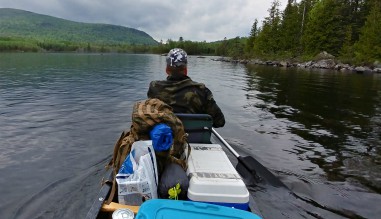
The canoe was decided upon because it gave us extra flexibility to get away to an island, which we deemed to be desirable to limit our exposure to any indigenous or visiting people to the area. The lake itself was quite large, with only a couple rental camp outfits on the southern end. We decided to head to a rudimentary boat launch on the eastern end of the lake, park there, and launch the canoe to make for the island at the northern end of the body of water.
In the event of an actual bug-out getaway, we thought an island would be much less likely to receive unwanted attention. The canoe has a very low noise signature, so getting to the island could be made with as little attention drawn as possible. A canoe is also extremely portable, so the ability to drag the craft out of the water to be camouflaged onshore was deemed desirable. Provided the half-mile long island was anywhere close to habitable, we’d be set to evacuate to the island, be in close proximity to needed resources such as water and firewood, and be able to disappear off-grid to evaluate our situation – as long as we were careful. As things turned out (next article), we had a lot to learn. Speaking of learning…
Lessons Learned Before We Even Left The Driveway
The first thing I learned in this exercise was: Have a plan! Between Jarhead Survivor and I, well, we have a lot of 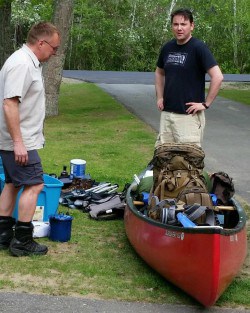 camping and survival shit. Granted, in our hypothetical survival situation, we were not aware there would be a large-scale catastrophe that ruled out bugging-in. Therefore, I was limited to what I brought with me (more on that in a bit.). If Jarhead Survivor was on his survival game – and he was- he should have intimate knowledge of his available gear, location, and priority in the plan if a bug-out was called for. So stop number one on the knowledge train: Plan before a bug-out occurs. Know your gear, where it is, and what you need the most based on your perceived needs and go-to location(s). Make a physical list and prioritize the items in order of need. Perhaps even have gear cached at other locations in different directions.
The next lesson I learned is this: What you have when your bug-out kicks off is what you have. A bug-out, by its definition, probably isn’t going to be decided and acted upon in the most convenient of times. In our little scenario, I was at Jarhead Survivor’s house, and as a consequence I was stuck with the gear I had in my truck and on my person. Going home and grabbing the AR-15 and a bunch of food and sub-zero rated sleeping bag wasn’t in the cards. This hand was dealt the second I started my truck and departed the homestead. Make sure your kit is portable – it’s no use if you can’t bring it along.
Related: Staying Alive During a SHTF Winter
The third lesson I garnered right off the bat was: Know the capabilities and mindsets of the people you are with. I was with a seasoned survivalist former US Marine who had his shit squared away. His outdoors skill sets are very accomplished, his gear is top notch – and more importantly – he knew how to use it. I knew I was in good shape for the duration of our little bug-out fact-finding mission. However, if shit went down while I was at work, well, we’ll just say that I would be aggressively encouraging people to not come with me. Don’t be afraid to ditch people who will drag you down, are ill-trained or ill-equipped, or will get you killed through ignorance. Hell, if their very presence is intolerable on a day-to-day basis for any number of reasons, don’t feel obligated to hit the hills with them unless they have something substantial to offer. You could very feasibly be stuck with someone for a very, very long term in a SHTF survival situation. Do you want someone who isn’t ready – or doesn’t have the survival mindset – to be with you during those stressful times? I think not.
More to Come
There will be at least two more follow-up articles written on this bug-out trip: the next post, part two, will focus on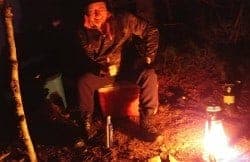 what we actually did for the trip and what happened – we were thrown a curveball at the end for sure! Part three (and maybe more to follow) will explore the lessons learned on this self-induced bug-out trip – there were many that Jarhead Survivor and I came up with post-trip. Some were affirmations of the expected, some were honest learning points neither of us anticipated.
The point of all this is: before you have no choice, choose to make the unknown as known as you can make it. Get out there with your gear and make sure it works and you work and your plan works. You DO have a plan, right? Because if you don’t have a plan and you don’t know if your constitution can handle the stress of an actual emergency, well… you might as well scroll back up to the first paragraph and re-read it.
Questions? Comments? Critiques? Sound off in the comments below!
The post Walking the Walk Part 1: Planning a Bug-Out Trip appeared first on SurvivalCache.


from SurvivalCache https://survivalcache.com/walking-the-walk-part-1-planning-a-bug-out-trip/


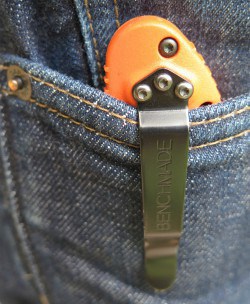
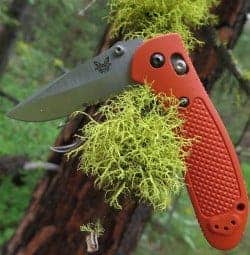
 the gateway drug to Benchmade knives. For many, their first handling of the Griptilian is met with disappointment. The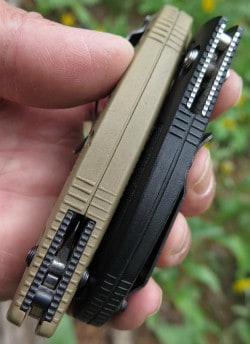




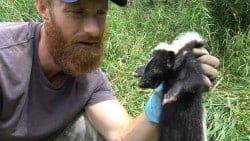 have ever totally consumed skunk, and I mean, not just one bite, but the whole animal! And while we’ve only just eaten the one, we may be considered experts because near as I can tell, there is no other living proof documented of the total edibility of skunk, and how to prepare it for a meal, anywhere! While some historical records from the 1800’s mention skunk in cursory manner, none go into enough detail to properly perform the skinning operation successfully.
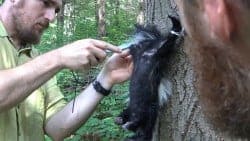 bother with a skunk, and it’s a fair question. The simplest answer that I can provide is that in an SHTF scenario, skunk might be one of those few species that remains untargeted, leaving those of us with iron stomachs free reign. In fact, skunks have very few natural predators, and for good reason – they are generally considered unpalatable to anyone unskilled and patient enough to correctly wield a sharp implement to diffuse natures original scent bomb.
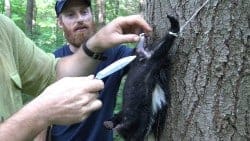 may spray and render the operation a failure. You really don’t want them to spray. If you get a docile member of the species, you can sometimes approach with a blanket held in front to conceal your silhouette, move slowly, and cover for transportation. After the animal is dispatched, clean it well. Wash with warm soapy water with rubber gloves, paying attention to the crevices and anal region.
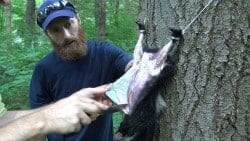 that no liquid is spilled (this is much easier to demonstrate rather than explain so be sure to watch the accompanying video). Be careful not to play around with any of the tissues around the anus anymore than necessary as spilled liquid will end up on the meat giving it that distasteful flavor we associate with skunk – burnt tire and garlic. You’ll get immediate feedback on this as the more you move the tissues, the more smell is released.
 think you are home free now, but there’s more. Carefully inspect for any fat tissues that may conceal other scent glands. We found some in the pits of the legs, around the neck and various other locations. These look like small light colored beans. Remove all of these or you may end up with more off flavors. If you’ve deglanded raccoon before, you know how to do this already.


 prepared
  BBQ. Except these were hurricanes that disrupted the lives of tens of thousands of residents. Remember the clogged highways of escapees, and what happened to those unwilling to evacuate? Some of them are dead. Why? Because they were ill prepared to weather a storm or have sense enough to heed the advice to leave the area.
 and your family, but so far, nothing has happened. Like a diet or exercise (tell me about it) following through can be the tough part just to jump off center.
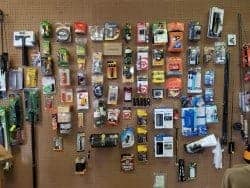 will need to survive a SHTF. Be it a hurricane, flood, wildfire, tornado, civil unrest, or economic collapse, it is going to take supplies of every description to withstand the downfall. This may be for 72 hours or 72 days or more. Who knows?
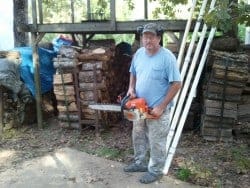
 might be a chainsaw to remove downed trees or limbs after a storm in order to get down the driveway. It might be gardening tools and supplies to plant your own food producing garden. It could be installing and maintaining a hand pump water well in the backyard. It could be something as simple as a couple fire extinguishers in the house or shop.
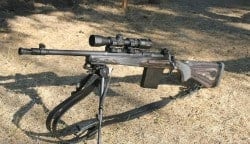 comfortable, especially if you were not raised up around them. For others, they often make the mistake of too much emphasis on guns and ammo to the neglect of other critical aspects of prepper survival.
 the street, in the neighborhood and town where you live as well as the state. It also means our country and the world. Include in this regular daily monitoring of the local, regional, and national news and weather. Know what is happening around you and you are more likely to be ready for anything.
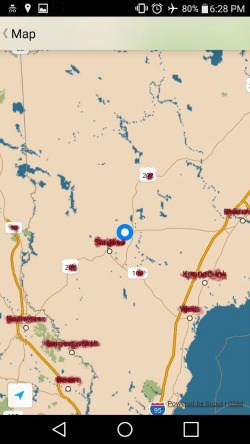 many viable escape routes and have you traveled them just to inspect the availability of services, and supplies along the way? Have you identified the gas stations, hospitals, police stations, grocery stores, camping areas or hotels? You best know, and have alternatives mapped out as well. Then take weekend trial runs to check them out. Are your Bug Out bags packed and ready to go at a minute’s notice?
 prudent, don’t forget the Bug In option. It may become your only option, or indeed the best one available. For us senior preppers, a Bug In may be the only serious option, but we have to recognize the possibility that we may be forced to leave as well. But for now, our home is our fort.


